News Details
Nebraska’s NRDs Demonstrate Value of Flood-Control Infrastructure During Historic Rainfall
LINCOLN, Nebraska – Heavy rainfall across eastern Nebraska Sept. 30-Oct. 1, 2026, put flood-control infrastructure to the test, demonstrating how Nebraska’s Natural Resources Districts (NRDs) protect lives, property, and critical infrastructure.
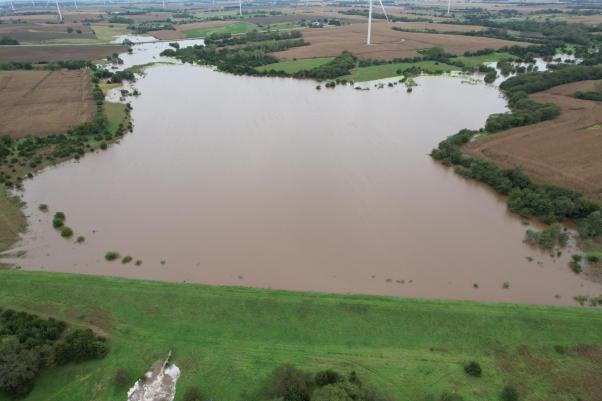
In the Omaha metro, 5-9 inches of rain fell overnight, and all three major Papillion Creek systems reached record crests. Papio-Missouri River NRD’s 17 flood-control reservoirs functioned as designed. Wehrspann Lake rose 8 feet, storing floodwater and slowly releasing it to help reduce downstream flooding and erosion.
The Papio NRD is currently constructing three additional flood-control reservoirs. By 2035, the district expects to have 20 reservoirs in the Papillion Creek Watershed.
In Lincoln, the airport recorded 6.15 inches of rain Sept. 30, breaking a daily record that had stood since 1910. Parts of the Salt Creek Watershed received up to 10.41 inches. The Lower Platte South NRD’s Salt Creek Levee System, Antelope Valley Project and other flood-control structures performed as designed, helping protect residents and property as Oak Creek and Little Salt Creek reached record crests.
In the Lower Platte North NRD, Wahoo Creek at Ashland reached its third-highest recorded crest. The district is working with the U.S. Department of Agriculture’s Natural Resources Conservation Service (NRCS) on a $19.7 million project to construct nine floodwater-reduction dams in the Wahoo Creek Watershed, with completion expected by 2032.
Farther south, the Lower Big Blue NRD reported that its flood-control structures functioned as designed despite heavy rainfall across Saline, Gage and Jefferson counties. Many structures approached capacity, but none discharged through an auxiliary spillway. Together, the district’s watershed projects provide approximately 70,000 acre-feet of flood storage, helping reduce the amount of water reaching downstream areas.
Since their establishment in 1972, Nebraska’s NRDs have worked with local, state and federal partners to build and maintain flood-control infrastructure. This historic rainfall event demonstrated the importance of these long-term public investments and the role special districts play in protecting communities and reducing flood damages.