News Details
NRDs Now Taking Orders for Spring Tree Seedlings
LINCOLN, Nebraska – Nebraska’s Natural Resources Districts (NRDs) are accepting orders for conservation tree seedlings for spring planting. Ordering early helps landowners secure their preferred species and prepare for spring planting.
A recent University of Nebraska-Lincoln survey found that 63% of rural Nebraskans surveyed had noticed fewer trees in their communities or surrounding areas over the past five years. The 2026 Nebraska Rural Poll also found that 37% of respondents were more interested in tree or forest management than they were five years ago.
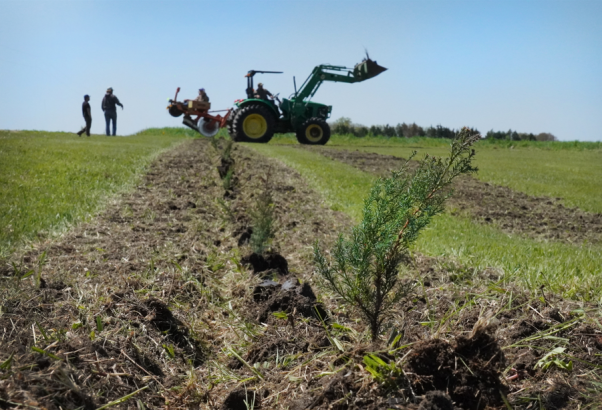
The NRD Conservation Tree Program offers landowners an affordable way to establish new trees and replace aging windbreaks. Since 1972, Nebraska’s NRDs have partnered with landowners to plant more than 102 million trees statewide.
At approximately $1.25 per seedling, with cost-share programs available through many NRDs, conservation trees provide benefits for farms, homes and wildlife. Trees and shrubs help reduce soil erosion, protect crops and livestock from wind, provide wildlife habitat, improve water quality and add beauty to the landscape.
“The NRD Conservation Tree Program gives landowners practical options for protecting their soil, water and other natural resources,” said Ryan Reuter, Nebraska Association of Resources Districts president. “Whether you’re establishing a new windbreak or replacing trees that have reached the end of their life, planting trees is an investment in your property and Nebraska’s natural resources.”
NRD staff and foresters work with landowners to select appropriate tree species and develop planting plans. Depending on the district, services may include planting assistance, weed barrier installation, and drip irrigation.
Popular species can sell out quickly, so landowners are encouraged to order early for the best selection. To learn about available species, cost-share options or how to place an order, contact your local NRD or visit www.nrdnet.org and click on “NRDs – Find Your NRD.”
For more information about the NRD Conservation Tree Program, visit www.nrdnet.org/tree-program.